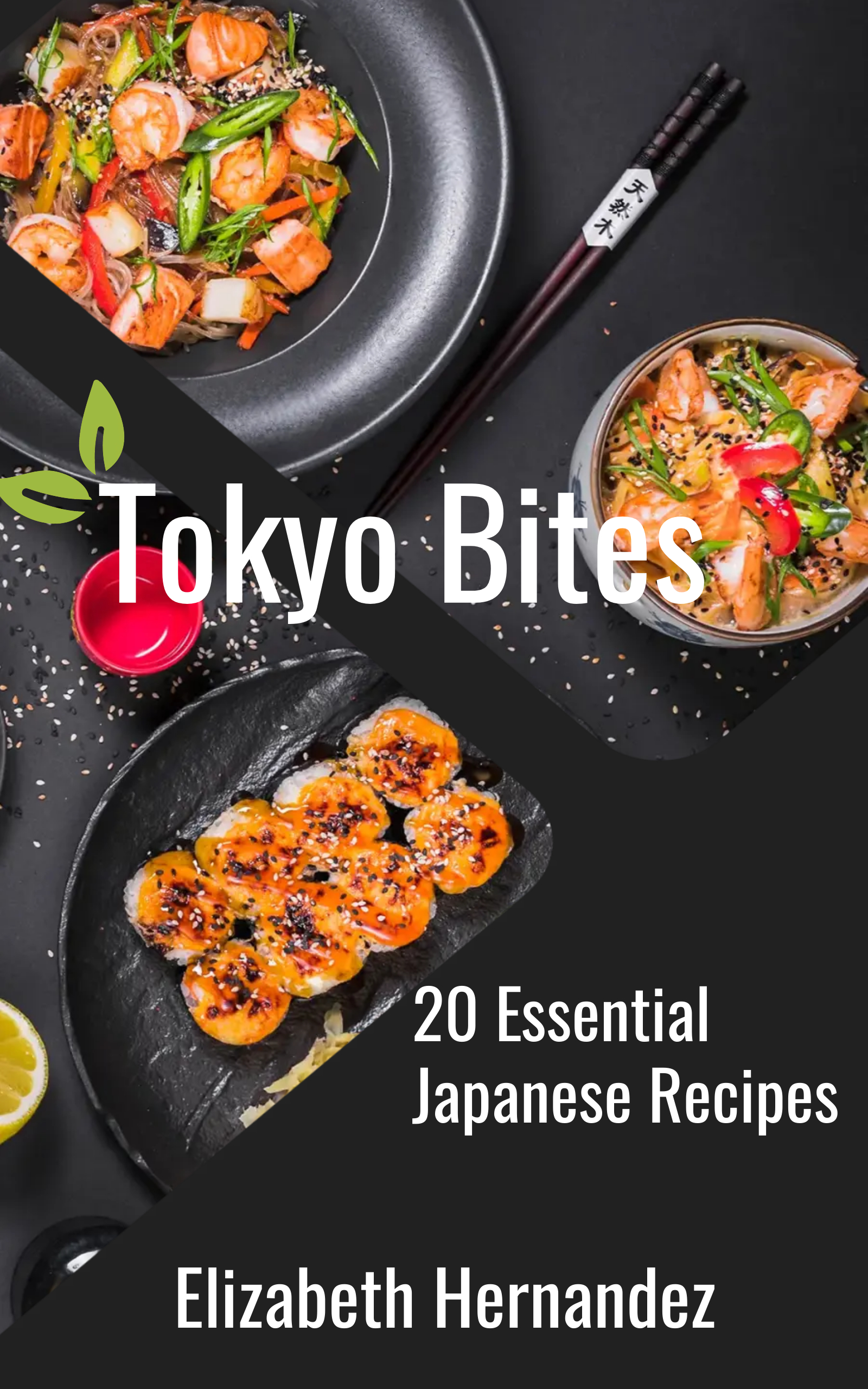
Tokyo Bites: 20 Essential Japanese Recipes
ELIZABETH HERNANDEZ
1 Teriyaki Chicken
Ingredients:
4 boneless, skinless chicken thighs or breasts
1/4 cup soy sauce
1/4 cup mirin
2 tablespoons sake (optional)
2 tablespoons sugar (white or brown)
1 tablespoon vegetable oil
1 teaspoon grated ginger (optional)
2 cloves garlic, minced (optional)
Sesame seeds and sliced green onions for garnish (optional)
Instructions:
Begin by making the teriyaki sauce. Combine the soy sauce, mirin, sake (if using), sugar, grated ginger, and minced garlic in a small saucepan. Stir the mixture well and bring it to a gentle simmer over medium heat.
Let the sauce simmer for 5-7 minutes until it slightly thickens and the sugar dissolves completely. Once reduced slightly, remove it from the heat and set it aside.
If using chicken thighs or breasts, cut them into evenly sized pieces for even cooking.
Heat the vegetable oil in a skillet or pan over medium-high heat. Once hot, add the chicken pieces to the pan and cook on each side for 4-5 minutes until they're nicely browned and cooked.
Once the chicken is cooked, reduce the heat to medium-low and pour the prepared teriyaki sauce over the chicken in the pan.
Allow the chicken to simmer in the sauce for another 2-3 minutes, turning the pieces to coat them evenly with the sauce. This will help the chicken absorb the flavors.
Remove the pan from the heat once the sauce has thickened and glazed the chicken pieces.
Serve the teriyaki chicken over steamed rice, garnished with sesame seeds and sliced green onions if desired.
This recipe yields deliciously flavorful and tender Teriyaki Chicken, capturing Japanese cuisine's sweet and savory essence. Adjust the sweetness or saltiness by altering the sugar or soy sauce quantity to suit your taste preferences.
Unveiling the Rich History of Teriyaki Chicken: A Culinary Icon of Japanese Cuisine
From its irresistible blend of flavors to its global recognition, Teriyaki Chicken is a quintessential dish in Japanese culinary heritage. This celebrated creation, revered for its harmonious marriage of sweet and savory elements, bears a rich history steeped in tradition and innovation.
Origins and Evolution
The origins of Teriyaki Chicken trace back centuries when the cooking technique and flavors emerged as a product of Japan's culinary evolution. The term "teriyaki" itself combines two Japanese words: "teri," meaning luster or shine, and "yaki," which refers to grilling or broiling. Initially, this method involved grilling or broiling fish with a glaze made of soy sauce, mirin, and sugar, imparting a glossy finish to the dish.
Over time, this technique transitioned to include a wider variety of proteins, prominently chicken, owing to its accessibility and adaptability. The melding of soy sauce's umami richness with the sweetness of mirin and the depth of sugar became the hallmark of the teriyaki flavor profile.
Culinary Tradition and Popularity
Teriyaki Chicken transcended household kitchens to become a staple in Japanese cuisine. Families across Japan embraced this dish, customizing it with regional variations and personal touches. Its popularity surged further as it ventured beyond domestic boundaries, making its mark in international culinary landscapes.
In the mid-20th century, Teriyaki Chicken found its way onto restaurant menus outside Japan, captivating palates worldwide with distinctive flavors. The dish underwent adaptations and modifications to suit local tastes, contributing to its widespread appreciation and integration into global food cultures.
Teriyaki Chicken Today
In the contemporary culinary sphere, Teriyaki Chicken remains a beloved emblem of Japanese gastronomy. Its preparation has evolved to accommodate diverse dietary preferences, including vegetarian and vegan renditions featuring tofu or vegetables doused in the signature teriyaki sauce.
Moreover, the versatility of Teriyaki Chicken has inspired innovative culinary fusions and reinventions. Chefs worldwide experiment with diverse ingredients, infusing the essence of teriyaki into burgers, sandwiches, tacos, and more, showcasing its adaptability and universal appeal.
A Culinary Legacy
Teriyaki Chicken epitomizes Japanese culinary craftsmanship, embodying a perfect balance of flavors that resonate across cultures and generations. Its evolution from a simple grilling technique to a global culinary sensation signifies its enduring relevance and timeless allure.
As enthusiasts and chefs continue to explore the realms of culinary creativity, the legacy of Teriyaki Chicken persists, symbolizing the beauty of tradition fused with innovation. Its journey from humble beginnings to becoming a cultural ambassador of Japanese cuisine reinforces its status as an enduring culinary icon cherished worldwide.
2 Sushi Rolls (Maki Rolls)
Ingredients:
Sushi rice (2 cups uncooked rice)
Nori (seaweed) sheets
Rice vinegar (3 tablespoons)
Sugar (2 tablespoons)
Salt (1 teaspoon)
Assorted fillings: Sliced fish (like tuna or salmon), avocado, cucumber, tempura shrimp, imitation crab, etc.
Bamboo sushi mat (makisu)
Water for handling rice
Instructions:
Prepare the Sushi Rice:
Rinse the rice in a strainer until the water runs clear. Cook the rice according to package instructions.
While the rice is still hot, transfer it to a large bowl. Mix rice vinegar, sugar, and salt in a small saucepan, then heat gently until the sugar dissolves.
Drizzle the vinegar mixture over the rice and gently fold it using a wooden spoon or spatula. Be careful not to smash the rice grains. Allow the rice to cool to room temperature.
Prepare the Fillings:
Slice your chosen ingredients into thin strips suitable for rolling. You can also prepare tempura shrimp or any other cooked ingredients beforehand.
Assembly:
Place a nori sheet on the bamboo sushi mat with the rough side facing up.
Wet your hands with water to prevent the rice from sticking, then grab a handful of sushi rice (about a cup) and spread it evenly over the nori, leaving about a half-inch margin at the top edge.
Arrange your chosen fillings in a line across the center of the rice.
Start rolling the nori and rice over the fillings using the bamboo mat.
Apply gentle pressure to ensure a tight roll.
Finalizing the Roll:
Once rolled, apply a small amount of water on the top edge of the nori to seal the roll.
With a sharp knife dipped in water, slice the roll into bite-sized pieces, usually about 6-8 pieces per roll.
Serve and Enjoy:
Arrange the sliced sushi rolls on a plate and serve with soy sauce, wasabi, and pickled ginger.
Remember, sushi making can take some practice to perfect the rolling technique, so don't worry if your first attempts aren't flawless. Experiment with different fillings and combinations to suit your taste preferences, and enjoy the creative process of making homemade sushi rolls!
The Intriguing History of Maki Rolls: Unraveling the Evolution of Sushi's Iconic Creations
Sushi, revered globally for its exquisite taste and artful presentation, encompasses diverse styles, among which Maki Rolls stand as a testament to culinary innovation. These delightful rolls, wrapped in seaweed and embracing a variety of fillings, boast a captivating history that intertwines tradition, creativity, and cultural evolution.
Origins Rooted in Tradition
The origins of Maki Rolls can be traced back to ancient Japan, where preservation methods like fermenting fish with rice led to the birth of a rudimentary form of sushi. Initially, this early sushi was a means of preserving fish, with the rice discarded before consumption. Over time, the Japanese began consuming fish and rice, marking a pivotal shift in sushi's evolution.
Emergence of the Roll
Combining rice, fish, and seaweed into a compact roll gained prominence during Edo (1603-1868). In this era, Edo (now Tokyo) witnessed the rise of street food culture, fostering the development of "nare-zushi" – a precursor to modern sushi. Nare-zushi consisted of fermented fish wrapped in sour rice, a predecessor to the vinegared rice used in contemporary sushi.
Birth of Maki Rolls
The transition from nare-zushi to Maki Rolls occurred gradually. As sushi chefs experimented with different ingredients and techniques, wrapping fish and vegetables with vinegared rice in seaweed gained momentum. This innovation resulted in the birth of makizushi, or rolled sushi, paving the way for various culinary possibilities.
Evolution and Diversification
Maki Rolls flourished throughout Japan, each region imbuing its unique touch into the creation. From the classic Edo-style Maki Rolls featuring simple combinations like tuna or cucumber to the inventive variations incorporating tempura shrimp, avocado, or imitation crab, these rolls reflected regional tastes and seasonal ingredients.
Global Expansion and Innovation
The latter half of the 20th century witnessed sushi's global expansion, facilitated by globalization and cultural exchange. As sushi gained popularity beyond Japan's borders, chefs worldwide began experimenting with Maki Rolls, adapting them to suit diverse palates and incorporating local ingredients.
Contemporary Maki Rolls
Maki Rolls epitomizes the fusion of tradition and innovation in the contemporary culinary landscape. Sushi chefs continue to push boundaries, crafting inventive combinations that captivate both purists and adventurous eaters. Vegetarian and vegan variations featuring avocado, cucumber, and vibrant vegetable fillings reflect the evolving dietary preferences of modern consumers.
A Culinary Odyssey
Maki Rolls, with their storied past and ever-evolving nature, represent the dynamism of Japanese cuisine. From their humble origins as a preservation technique to becoming a globally cherished culinary delight, these rolls have traversed a fascinating journey, embracing tradition while embracing innovation.
The enduring popularity and adaptability of Maki Rolls reaffirm…
3…
In…
Keep reading Tokyo Bites
You've reached the end of the free preview. Purchase this eBook for permanent access in your Novel Thunder Library, or read it with an eligible Novel Thunder subscription.
Buy eBook — $5.99